


Blog
THE MEGACITY

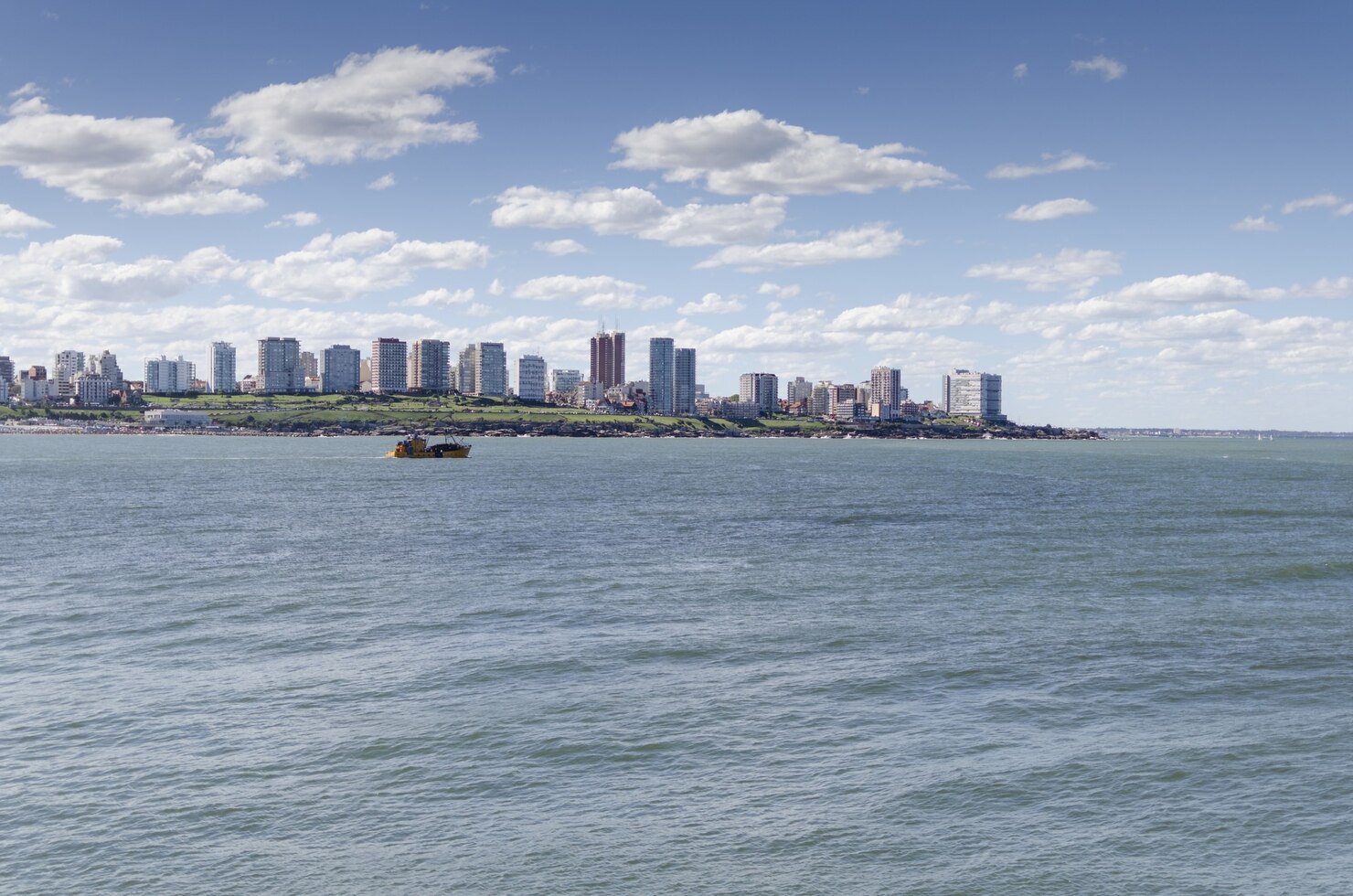
An African Dubai: Lamu has the cranes, now it needs the city
The coastline is rapidly changing into a paradise where a deep-water port and an expanding airport are drawing global capital. A once historic archipelago is emerging as Africa’s newest contender for megacity status
LAMU
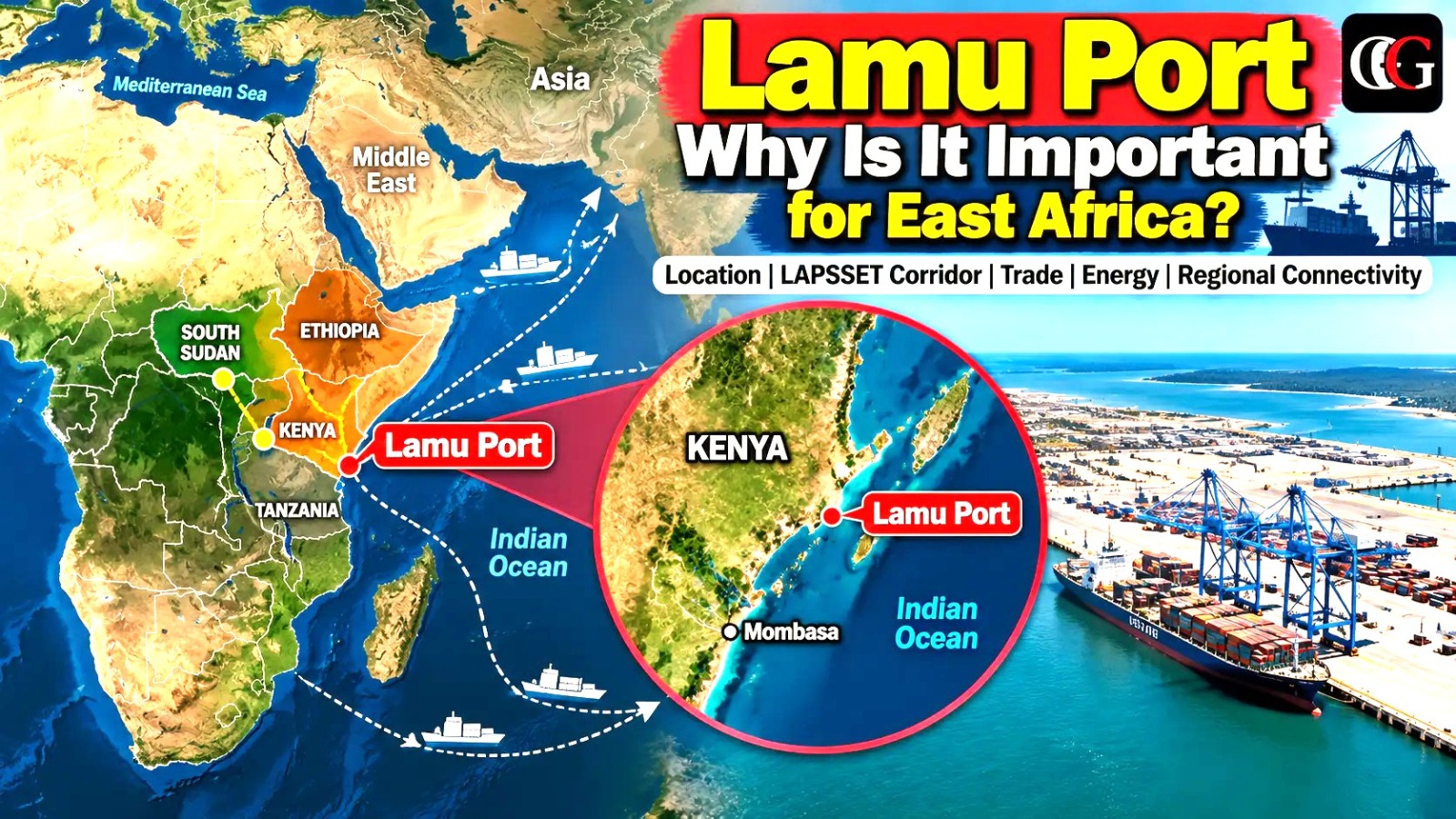
The cranes at the Port of Lamu are the tallest things on this coastline.
From the old town, across the channel, they stand over the water while dhows come in under sail a hundred yards away. Both are working. Neither looks like a photograph of the other.
That view is why people here have started reaching for Dubai, and it is also why the comparison is doing more work than it can carry.
What is being built is real and large. A refinery valued at sixteen billion dollars, designed to process seven hundred thousand barrels of crude oil a day. A port whose natural draft can take the largest crude carriers.
An airport at Manda being expanded toward international traffic. And a security installation that planners mention when investors ask about risk and skip past when journalists do.
Industry does not build a city by itself. It builds the reason for one. A refinery of that size needs thousands of people on site, and those people need somewhere to sleep, eat, send their children to school and see a doctor.
Companies that supply it need offices, warehouses and banks. The banks need staff. The staff need housing. This is the ordinary arithmetic of industrial towns, and it has been running since the first mill was built beside the first river.
In Lamu, the arithmetic is running faster than the building. Engineers, logistics managers and port officials are arriving on the mainland in numbers that were not expected this early. Developers are putting up serviced apartments and gated compounds for people on two year assignments who need a finished flat rather than a construction project of their own.
At the center of the commercial plan sits the Mokowe Special Economic Zone, which offers the sort of terms that make an accountant sit forward. Companies inside pay ten percent corporate tax for their first decade against a national rate of 30. Imported machinery and building materials come in duty free and without VAT, and a single digital licensing desk replaced the queue of separate approvals.
The zone is also where the refinery’s petrochemical output is meant to go, into polymers, plastics, textiles and fertiliser. Those plants bring their own payroll: accountants, legal teams, ICT consultants, freight brokers. None of them are industrial jobs, and all of them are needed.
This is the part of the story that gets less attention than the towers, and it may matter more for anyone outside East Africa. A megacity is not defined by what it manufactures. It is defined by the density of people who can do complicated work in the same place.
Lamu does not have that density yet. It has a plan for acquiring it, and the plan depends on professionals deciding that a coastal town with a new port is a reasonable place to raise a family.
That decision turns on unremarkable things. Whether the hospital can handle a complicated birth. Whether the international school actually opens. Whether the internet holds up during a call with a client in Nairobi. Whether there is anywhere decent to eat on a Tuesday.
The honest version of the Lamu story is that the infrastructure is arriving ahead of the city. The refinery has not been commissioned. Much of the housing under construction has no tenant yet.
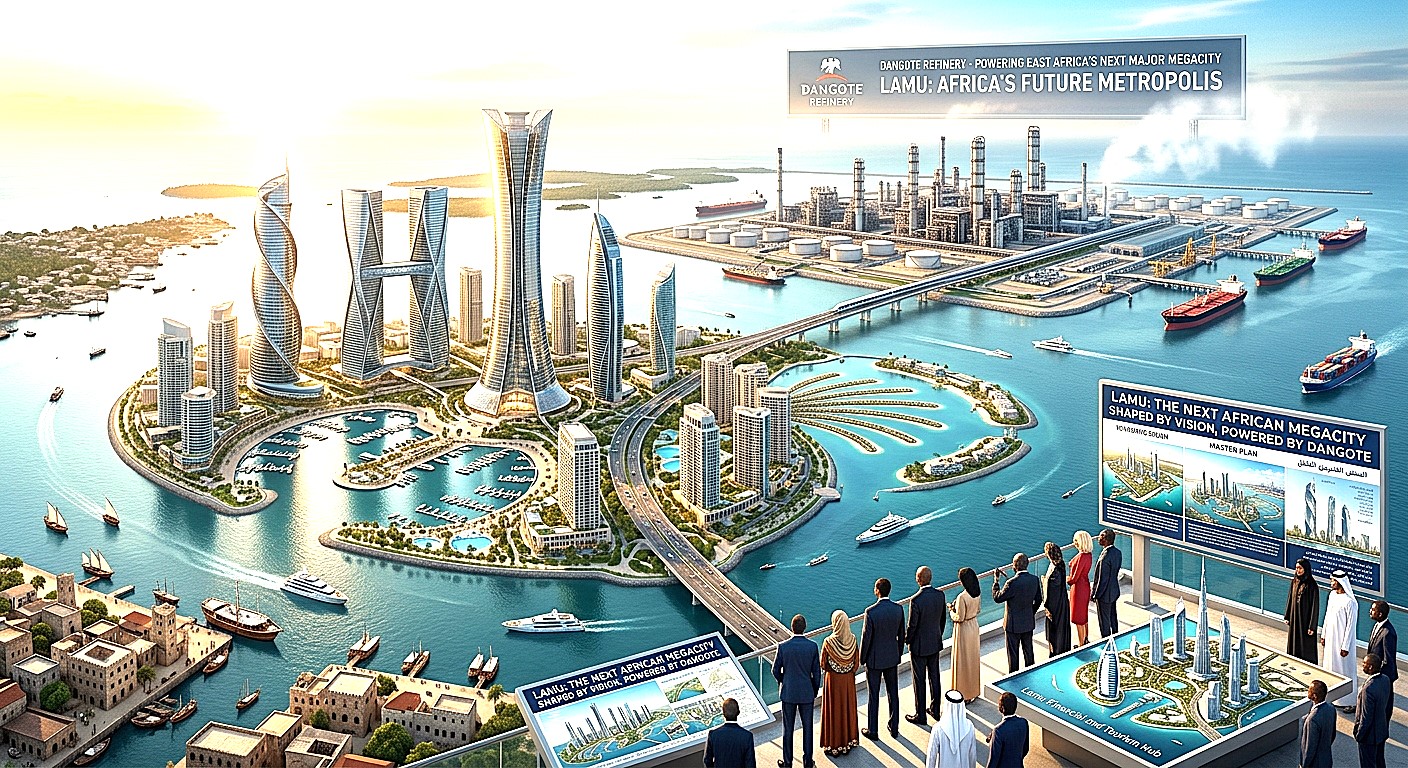
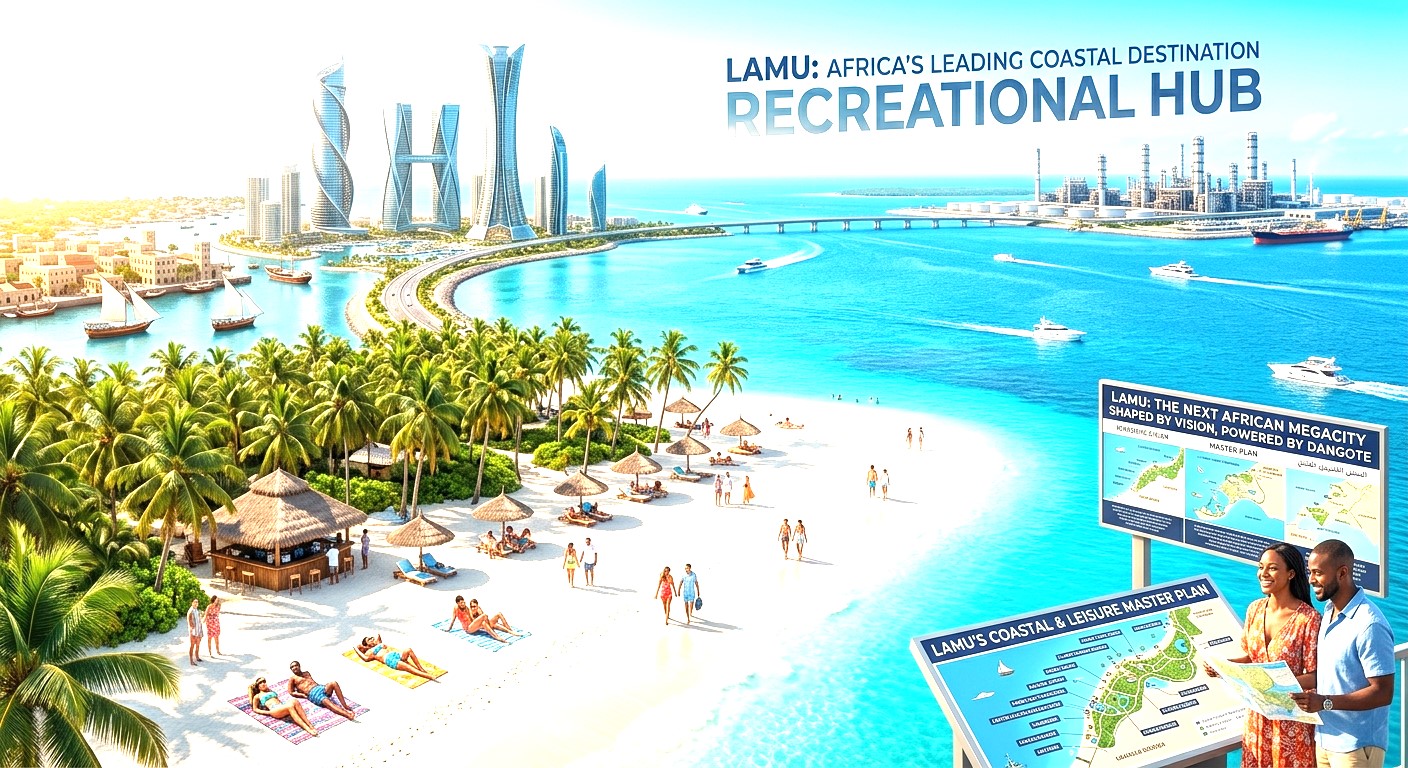
The population that would justify a private hospital, a retail district and an international school is a projection rather than a census figure. Investors are buying into a sequence, and sequences have a way of arriving later than the brochure says.
None of that makes the build-out imaginary, and none of it is unusual. Ports and refineries have been pulling towns up behind them for two centuries, and the towns that succeed are the ones where somebody thought about drainage, schools and bus routes at the same time as the deep water berth.
From the old town, the cranes are visible at dusk, lit before the dhows come in.
The comparison to Dubai will keep being made, mostly by people selling something. What Lamu actually has is a port with real depth, a refinery with real capacity, and a stretch of mainland where a city could plausibly grow.
Whether it becomes one is a question about schools and clinics and whether anyone wants to live there in twenty years. The cranes are already answered. The rest is not.